How to Choose a Piano for Playing at Home
One of my favorite parts of returning to work is when my students excitedly share that they received an instrument over the break. I am thankful that I have students whose families recognize the value of making music enough to purchase an instrument for them. Even the smallest musical toy purchase lets me know that there is a family that care to create space for joy and creativity. That being said, for those interested in maximizing learning potential through music making, instrument beats toy!
Like I tell my husband, it’s better to buy nice than to buy twice - and that’s possible at different price points. On one end of the spectrum, you have:
An Acoustic Piano, Upright or Grand
Advantages: Likely a one and one purchase, incredible fancy vibes
Disadvantages: Can be expensive, requires regular professional maintenance from tuner
On the other end, you have:
An Electric Keyboard
Advantages: Highly portable, no excuse for not playing when traveling, accessible pricing
Disadvantages: Touch and sound quality not great, difficult to develop proper instrumental technique, often have less than 88 keys which makes it harder to find the correct key in the correct place
In the center, there are:
Digital Pianos
Advantages: Keys are weighted so students can experience controlling the sound with their touch, closer to acoustic piano feeling
Something to consider: The better ones have similar price points to entry level acoustic pianos
The cost considerations assume that you are purchasing a new instrument - many families who have entered a phase where their student is not actively studying music can be looking to sell (or give away!) their instruments. You can often find a used acoustic piano, keyboard, or digital piano for lower than retail price. If you love hunting for deals, it’s your time to shine!
Because brands are constantly innovating with updates to their models, it is difficult for me to recommend a specific instrument. When you are ready to invest, I suggest using the search term “full-size weighted piano.” An 88 key instrument that is at least semi-weighted will grow with the music maker in your home. If you have questions about a model that’s piqued your interest, get in touch to share it with me and I’ll be happy to let you know what I think! If you are headed to the Steinway Gallery - please take me with you :)
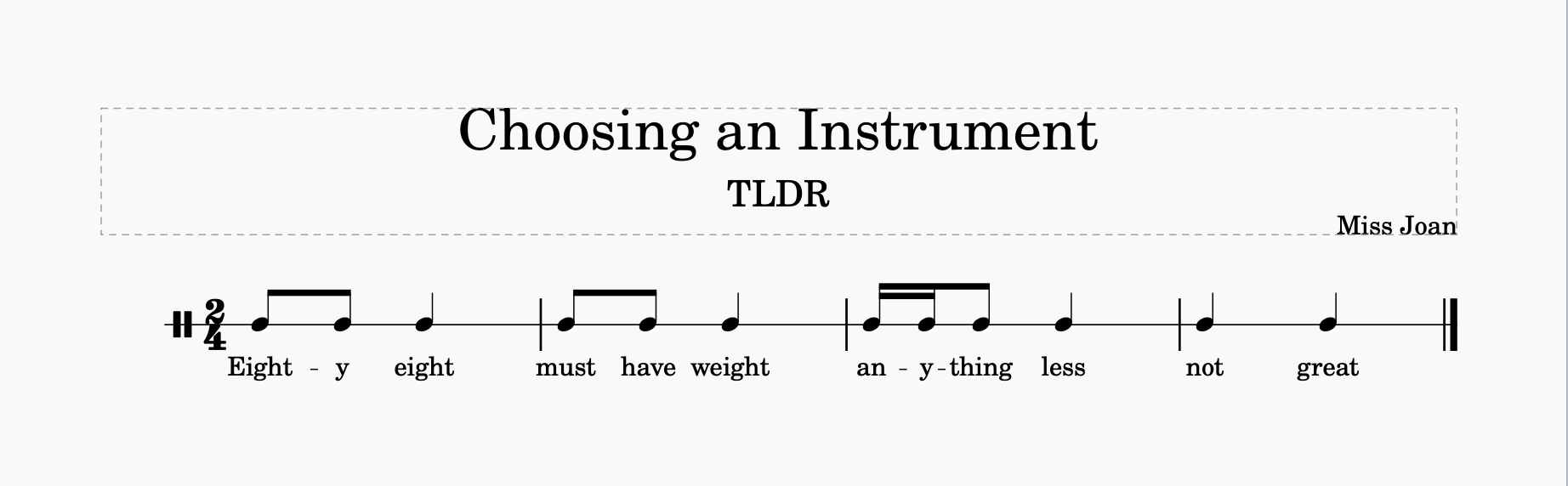
A quick way to remember the type of instrument that’s best for practicing at home :) Want your child to know how to read this rhythm? Click the button below!